What is asset recovery?

Making sure crime doesn't pay

The purpose of asset recovery is to maximise the use of legislation to tackle criminal activity and reduce its impact on communities. By identifying, restraining, seizing and confiscating assets obtained through criminal conduct, asset recovery helps ensure that crime does not pay.


Recoverable assets can include cash, property, vehicles and other high-value items. Under the Asset Recovery Incentivisation Scheme (ARIS), a proportion of recovered funds are returned to law enforcement agencies and other partners, supporting further asset recovery activity and wider crime reduction efforts.


green-bmw-m4-parked-glass-building-night

College of Policing. Asset recovery. Available at: Asset recovery | College of Policing (Accessed: May 2026)

The four main types of asset recovery

Cash seizure

Cash seizure refers to situations where cash, cheques or bonds amounting to £1,000 or more can be taken if there are reasonable grounds to suspect they are linked to criminal activity, either as proceeds of crime or intended for use in crime. An application may then be made to a civil court for the detention and forfeiture of the cash under POCA.

Gavel-and-cash

Confiscation

Confiscation applies when an individual has been convicted of an offence and is believed to have gained financially from that crime. Legal proceedings are then used to recover the value of the benefit obtained. This may include assets such as money, property or vehicles. Following a conviction, an application can be made to the court for a confiscation order, after which the court will determine which assets can be recovered and their value.

Black-Luxury-SUV

Civil recovery

Civil recovery allows assets to be recovered through the civil courts rather than criminal proceedings. Unlike confiscation, a criminal conviction is not required. Instead, it must be demonstrated, on the balance of probabilities, that the assets are the result of unlawful conduct, rather than proving this beyond reasonable doubt.

House

Taxation

Taxation involves recovering unpaid taxes on income gained through criminal activity, such as income tax or corporation tax. This provides an additional method of addressing profits from crime without needing to pursue a separate criminal conviction.

Tax-documents-calculator

Cash seizure

Cash seizure refers to situations where cash, cheques or bonds amounting to £1,000 or more can be taken if there are reasonable grounds to suspect they are linked to criminal activity, either as proceeds of crime or intended for use in crime. An application may then be made to a civil court for the detention and forfeiture of the cash under POCA.

Gavel-and-cash

Confiscation

Confiscation applies when an individual has been convicted of an offence and is believed to have gained financially from that crime. Legal proceedings are then used to recover the value of the benefit obtained. This may include assets such as money, property or vehicles. Following a conviction, an application can be made to the court for a confiscation order, after which the court will determine which assets can be recovered and their value.

Black-Luxury-SUV

Civil recovery

Civil recovery allows assets to be recovered through the civil courts rather than criminal proceedings. Unlike confiscation, a criminal conviction is not required. Instead, it must be demonstrated, on the balance of probabilities, that the assets are the result of unlawful conduct, rather than proving this beyond reasonable doubt.

House

Taxation

Taxation involves recovering unpaid taxes on income gained through criminal activity, such as income tax or corporation tax. This provides an additional method of addressing profits from crime without needing to pursue a separate criminal conviction.

Tax-documents-calculator

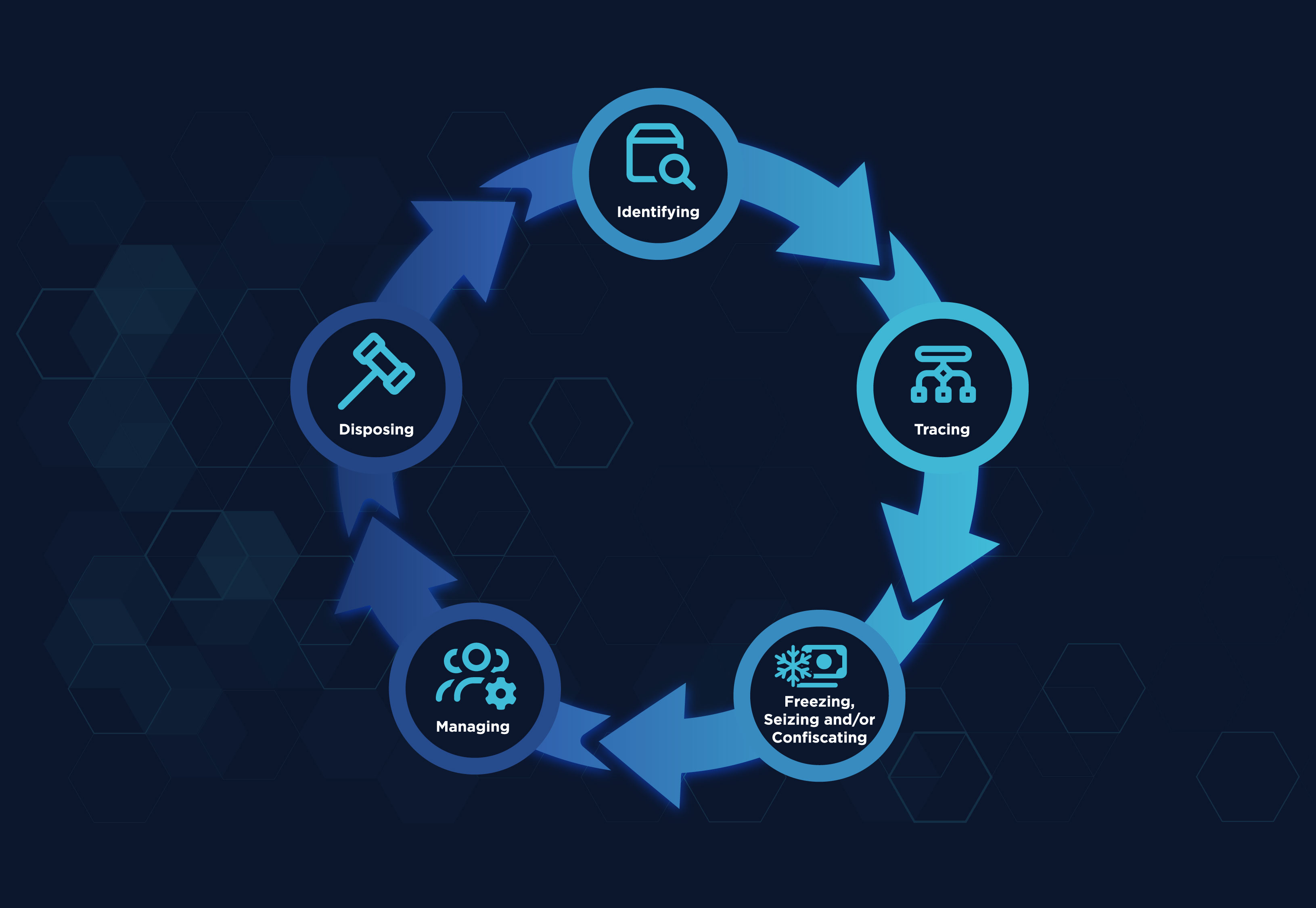
The asset recovery lifecycle

The asset recovery lifecycle is the process through which assets linked to criminality or suspected unlawful conduct are identified, investigated, restrained, recovered, managed and disposed of in accordance with the law. Disposal refers to the sale, transfer or other lawful handling of recovered assets. Through a range of recovery powers, the asset recovery system helps prevent individuals and organised crime groups from benefiting from unlawful activity and supports the principle that crime should not pay.

AMO_Lifecycle of Asset Recovery graphic